Saturday, June 1, 2013

Portraits of Vietnam - Portraits of History V

Portraits of Vietnam – Portraits of History V
A Solo Exhibition by Choo Meng Foo
Life, is but, an experiential journey. Portraits of Vietnam is one such journey of questioning and returning to the idea of ‘Genius Loci’
Choo Meng Foo

The Monochromatic series
50 HANG GAI, 2012


CHILLING, 2012
View of Nha Chung towards the Cathedral. So many bikes and bicycles! People having a break, drinking coffee and tea, near the church.
Một góc phố nhà thờ Lớn: Cổ kính và Thân thương, Yên bình và Sâu lắng, Giản dị mà Trong veo, đậm đà sắc Hà Nội (TS. KTS Ngô Minh Hùng)

DINNER, 2012
Sometimes I wonder, why their seats are lower but they all look so happy dinning along the road side. I guess the height of the chair does not create happiness, but a sense of wellness perhaps does. This is outside a pharmacy, the entrance is blocked with a long string of diners. The space outside is public perhaps, allowing it to be used by the public, as people gather,
it morphs into a frency celebration. Sometimes it is not how much one can afford, it is living the moment that makes it all worthwhile.

DOES ALL ROADS LEAD TOWARDS THE LIGHT? 2012

EVENING ARRIVED, 2012
A view of 50 Hang Gai Road, Hanoi.

FASHION STREET, 2012

GOING ACROSS, 2012
Many boarded the boat to this island so they could get a glimpse of nature. The gigantic limestone cave, spectacular. Everyone who had seen it has been impressed. Nature has never failed to awe and captivate us. Sometimes however, beneath our our feet are the tiny wonders that we never did observe. Get a magnifying glass or microscope and we would be captivated. The micro world is the next frontier to be explored by the individual.

MEETING FOR TEA, 2012

OUTSIDE THE CAFE, 2012
24 Nha Tho, Hanoi

SELLING BREWED TEA, 2012
She is 60 years old. She thought that she should learn to sell something to make some money. She thought what's better then selling tea? The next day, she put some boiling water into a thermos flask, gather a few cups in a pail, filled it up with some water and she goes to the corridor to set up her stall. For a small amount of money, she would serve patrons with her tea in small cups. Her business is brisk. A simple idea, a simple set up, a simple corridor, a simple way of sitting and a simple small cup with tea – that is business. Entrepreneur!

SHE IS ALWAYS THERE, 2012
He drove us from Hanoi to Halong Bay. He is quite a sturdy guy with huge arms and thick wrist. He is a cheerful person. Perhaps because he has a great wife. When he returns home she is always there to greet him. While he is driving, she is the figure that is always within his glimpse. Always there within him.
Người tài xế đã đưa chúng tôi từ Hà nội đến với Vịnh Hạ Long. Anh ta là người đàn ông cường tráng với cánh tay vạm vỡ và bàn tay thô dầy. Anh ấy là một người vui vẻ. Phải chăng anh ta có một người vợ tuyệt vời. Cô ấy luôn đón chào mỗi khi Anh ấy trở về. Trong mỗi chuyến đi, cô ấy thấp thoáng đâu đó quanh Anh ấy. Luôn luôn ở đó trong Anh

THE BICYCLE SHOP, 2012
A group of teenage foreigners descend at the bicycle shop one early morning. They are here to rent the bicycle for a day. They want to tour Hanoi on bicycle. They came from a city, thousands of kilometer away. The shop keeper is all smile attending to their needs.

THE GIRL AT SEA, HALONG BAY, 2012
She sells her produce from the boat. There were many types of tropical fruits, bananas, apples, dragon fruit, pineapples, coconut, etc. Within a short moment she would board the passenger boat and hawk her fruits. For an American dollar we could get a bunch of bananas.
We spoke in Mandarin among ourselves and we were shocked that she interjected our conversation conversing in Mandarin. She has adapted well into the world of commerce. To many, perhaps to modernize, is to first learn the language of the modern world, English, but here, the Chinese commerce has spread across the border. The ticket to the modern world perhaps is to be able to read, write and understand arithmetic. She acceptedAmerican dollars and Dong. I wonder if she would accept Renmingbi.
Người phụ nữ bán sản vật trên thuyền. Ở đó có nhiều loại hoa quả nhiệt đới, chuối, táo, thanh long, dứa, dừa v.v.v. Chỉ trong một thời gian ngắn cô ấy sẽ lát tấm ván đưa khách lên thuyền và chào mời bán hàng hoa quả. Với một đô la Mỹ, chúng tôi có thể mua được một nải chuối. Chúng tôi nói chuyện bằng tiếng Hoa và đã thực sự sốc khi cô ấy
xen vào câu chuyện của chúng tôi cũng bằng tiếng Hoa. Cô ấy hoà nhập khá tốt với thế giới thương mại. Đối với nhiều người, có lẽ để hiện đại hoá, đầu tiên là học ngôn ngữ của thế giới hiện đại. Tấm vé đến với thế giới hiện đại đó chắc hẳn là có thể đọc, viết và hiểu biết về tính toán số học. Cô ấy chấp nhận tiền đô la Mỹ và tiền Đồng Việt Nam. Tôi tự hỏi liệu cô ấy sẽ chấp nhận Nhân dân tẹ

THE LADY AT HER ROAD SIDE STALL, 2012
Tourists no matter where they come from will have the urge to take a piece of memorabilia home as a reminder, or evidence that established their being there, in time and space. Perhaps it too helps to prolong the sense of holidays. Or perhaps, it is a trophy to bring home especially when one come from so far.
She knows this very well. She had been through a few wars, first the Japanese, then the French, then the Americans and the Chinese. Like war, there is a trophy to bring home – honour. So too, souvenirs are trophies for the consuming tourists. They have poured into the country since 'doi moi' in 1986. Fighting a war without weaponry taught her how to be resourceful. Her she sells T-shirt with prints of 'Uncle Ho', the women in traditional 'Áo Dài,' and the flag of Vietnam. The tourists love them all.
Người phụ nữ trong cửa hàng trên phố. Những du khách từ mọi nơi sẽ được lời mời mua một món quà lưu niệm để minh chứng cho những nơi họ từng đến trong không gian và thời gian đó. Có lẽ chính điều đó giúp họ kéo dài cảm nhận về những chuyến đi nghỉ. Hay có lẽ, đó là một vật chiến thắng được đem về ngôi nhà của mình, đặc biệt khi ai đó đến chơi nhà. Cô ấy biết rất rõ về điều này bởi Người phụ nữ này đã trải qua một số cuộc chiến tranh của đất nước, đầu tiên với người Nhật, rồi tới người Pháp, và sau đó là người Mỹ và Trung Quốc. Giống như cuộc chiến, ở đây có một kỷ vật để đem về nhà, thật vinh hạnh. Do vậy, quà lưu niệm là những chiến lợi phẩm đối với những người khách du lịch. Những vật phẩm mà được đem ra bày bán từ khi "quá trình đổi mới" những năm 86. Tham chiến tay không với cuộc chiến đã cho thấy Cô ấy trở nên tháo vát và lanh lợi vô cùng. Cô ấy bán áo phông in hình "Cụ Hồ", hình ảnh người Phụ nữ trên "Áo Dài" truyền thống, và lá cờ Việt Nam. Những du khách rất yêu thích những điều này

THE LADY, 2012.
A street with lots of bicycles. A traditionally dressed lady with her produce pedaling on the street. Perhaps selling could be such a lonely and individual affairs. Perhaps, she has children and parents to be taken care.


THE LONE BICYCLE, 2012
A lone bicycle and a road filled with moving bikes. The shops watched all this from the side of the road, not complaining nor envious. Just another scene.

MOBILE RETAIL SHOP, 2012

THE YOUNG EMPEROR OF MODERN DAY, 2012
Here you can get the best massage in Hanoi. The manager other than doing the administrative work also has to be hands on.
It seems modern life is so great that one can enjoy the treatment by spending $25. Perhaps in the old days, only emperor can enjoy such treatment. Democratization of services? Ice water too perhaps is the drinks to be enjoy by emperor in the hot summer.
Now a child with parents who can afford a little luxuries can pay for the masseur to massage the pair of small feet. They get to enjoy the best treatment here.
HOÀNG ĐẾ TRẺ CỦA THỜI HIỆN ĐẠI. Ở Hà nội bạn có thể có được dịch vụ mát xa tốt nhất. Người quản lý hành chính có thể chỉ cho bạn biết về dịch vụ đó. Điều này cho thấy cuộc sống hiện đại thật tuyệt vời khi ta có thể tận hưởng sự điều trị mát xa chỉ với 25$. Có lẽ ngày xưa, chỉ có hoàng đế có thể thưởng thức được kiểu mát xa đó mà thôi. Sự dân chủ hoá của các loại dịch vụ này? Nước mát, cũng vậy, là đồ uống thưởng thức của hoàng đế vào mùa hè nóng bức. Ngày nay, một đứa trẻ với cha mẹ, những người có thể chi trả một chút xa hoa, cho người làm nghề đấm bóp, cho dịch vụ mát xa đôi chân nhỏ bé. Chúng tôi thực sự tận hưởng phương pháp điều trị mát xa ở đây

THE TALE OF TWO SISTERS, 2012
Both are rich. And yet one of them still believe in working even when she never needs to do so. She wants to be useful. The other, she loves shopping, tuck below her arm is a lady's bag full of disposable cash, for her to buy all the material she fancy. However much she buy, she still feels empty. Emptiness some how cannot be filled with money and possessions. Her love one just met an accident and died. Not her husband, she would not grieve so much. The decease is her elder son. He was trackless; he died while driving home after a great drinking session. She hated the alcohol he drank. However, no amount of hatred could bring him back, neither would retail therapy, that she knows, and yet she continued to do so. Her husband is to be blamed ...
Câu chuyện về hai chị em. Cả hai đều khá giả. Một người tin tưởng vào công việc cũng như không cần phải làm vậy. Cô chị muốn trở nên có ích. Người em thích mua sắm, để dưới tay mình là túi đầy tiền, để mua tất cả các loại hàng cô ấy muốn. Tuy nhiên dù mua rất nhiều món đồ, cô em vẫn thấy thiếu thiếu. Sự thiếu thốn đôikhikhócóthểlấpđầybằngtiềnvàcủacải.Cô ấy yêu một người vừa bị tai nạn và mất. Do chưa phải là chồng, cô ấy sẽ không đau buồn nhiều
lắm. Sự mất mát đó là người con trai lớn của cô ta. Anh ta đã không trở về; anh ta đã tử vong trong khi lái xe về nhà sau một buổi liên hoan lớn. Cô ta không thích loại rượu mà anh đó uống. Tuy nhiên, không điều gì có thể đem anh ấy trở lạichodùcôấybiếtrõđiềuđó.Chồngcủacôấy thật đáng trách...

Exhibition Opening


Acknowledgement
Thanks to the Vietnam Embassy, the Ambassador Prof. Nguyen Hong Thao and the Vietnam Ministry of Culture.
Ong Ying Ping • Dr Woo Soon Fatt • Roseline Tan and Meng • Michael Ng • Lynn Yap • Look Boon Gee and Sor Hiang • Chin Thoe • Adrian Tee and Jennifer Yu • J Y Huang • Francis Allese Yohannan • Chuen Ling • Claudia
Colin Ng and Maria Ng • Marina Blue • Henry Ong • Poh Eng Seng • Yvonne Xu • Wei Teck • Fara • Dee • Keli • Kelvin • Fred • Alfred • Regu • Hani • Eric • Patrick

3P Fengshui Consultancy Pte Ltd • One Olive • Orange Thimble • White Canvas • Brilliant Prints Singapore • Artitute • Editude Production • http:// www.indesignlive.asia/ • FotoHub • DreamAlbum • Tembusu Art Gallery • Drips Bakery Cafe

Tuesday, April 23, 2013

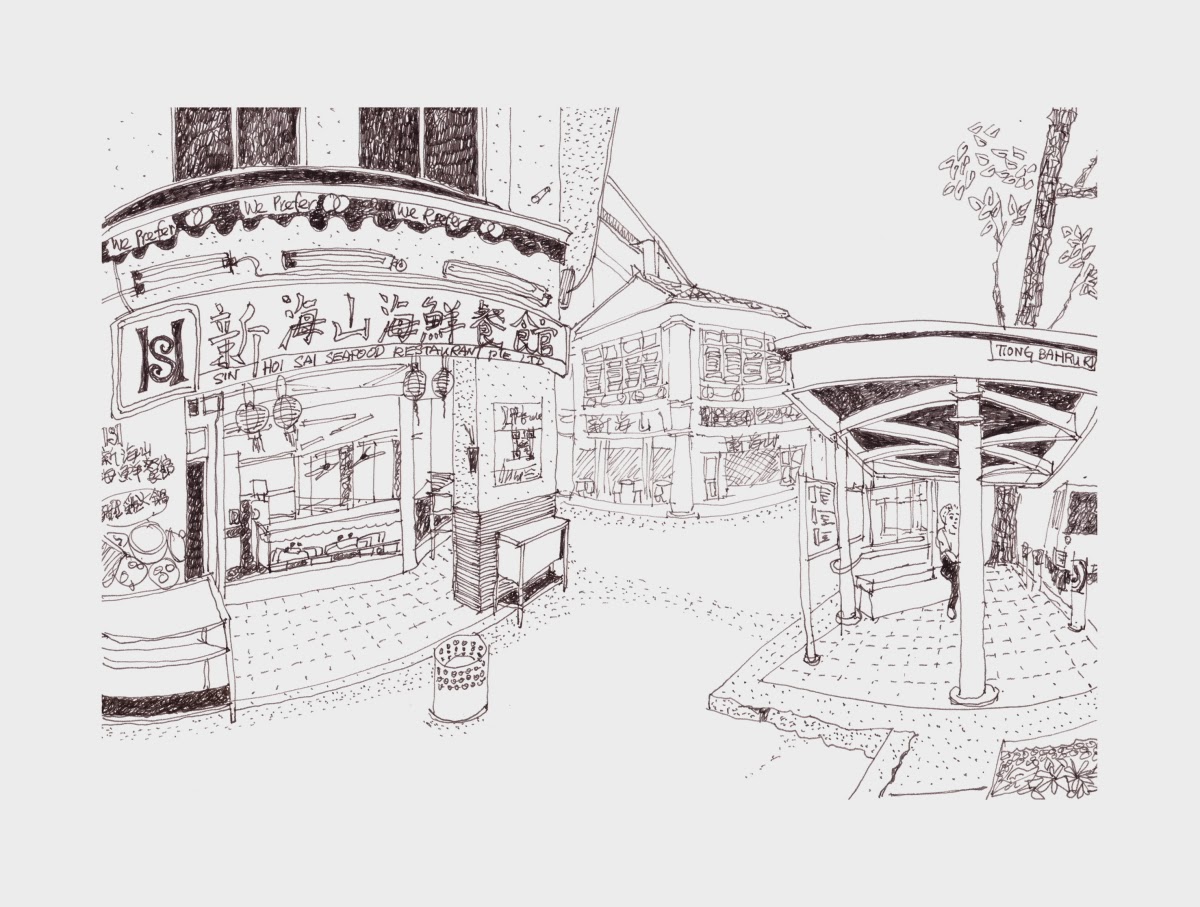
Tiong Bahru – Portraits of History IV by Choo Meng Foo


The Beginning
I have been doing the series titled the Portraits of History, which I exhibited last year at Galeri Utama. It is a series which I will continuously explore different subject matters and the process of art creation. Last year, the series was watercolor works integrating digital image manipulation application such as Photoshop.
A few things came together at the right time and moment. I was visiting Tiong Bahru quite often due to one of my exhibition at Orange Thimble last year title “Portraits of History”. I was reinterpreting images from old photographs and postcard into watercolor works for that exhibition. Also, answering to Colin’s (Owner of Orange Thimble and creative community supporters) invitation to exhibit in his Art Cafe again, and his suggestion of Tiong Bahru as a place worthy of history and re-focusing its sense of place, is the culmination of this series of ink and digital works documenting Tiong Bahru.
I grew to love the place and the ambiance of the Tiong Bahru. Increasingly, more designers, artists and architects took up residents in Tiong Bahru; the community grew organically and I see the parallel of this growth with that of Dian Zhi Fang in Shanghai where I hung out and wrote part of the book “100 ways to Photograhy”. Together with the invitation from Colin, I thought it was more apt to document Tiong Bahru in Ink. The series resulted in this exploration of the methodology of art creation – an integration of digital photography, manual sketching and collaboration.
I thought perhaps a form of ‘in the making’ and defining Tiong Bahru’s identity vis a vis the current influx of the creative community, both local and foreign, working with my affinity of incorporating digital technology into my work, and my coincidental discovery of the Sailor fountain pen’s ability of making exquisite fine line, could capture and document Tiong Bahru at this moment in Time. Incorporating in it is also the hint of a certain inevitability of its future. The sketches set out to capture these multifaceted aspects of Tiong Bahru, which are not just limited to its architecture conservation merits, but its food, the people, the details indicating the trace of practices and perhaps unraveling the sign which would cajole the collective memory of the past or present residents whether Singaporeans or foreigners. It is in this direction that I construe my ink sketches. Of course, due to my training in architecture and urban design, my observation and understanding weighted towards its spatiality, be it the transient or the permanence. I hope to be able to unravel the Genius Loci of Tiong Bahru, a term borrowed from Christian Norberg-Schulz.


The Process
I thought it would be great to experiment a continuation of the “Portraits of History” but with a different approach to the creation process and methodology, but again exploring the interplay of digital and hand drawing. Perhaps it is my obsession with technology and the hand that I believe whether it is technology or the hand, it makes no difference, importantly it is the expression of the mind and the way we see ourselves and the exterior world. My approach tends to blur the boundary between the original and the copies. Perhaps establishing the legitimacy of the copy as having the value and significance as equal to the original, in this case, incorporating the copy in the original, thus diffusing the
mark of authenticity and establishing the copy as having the legitimacy of the authentic.
First, I studied the area carefully for weeks and then document it with the camera. Through a close adherence to the idea of Genius Loci, people’s rootedness to a space or place, it is the phenomenon of people having this belonging to a certain space or perhaps how the space becomes identifiable through their collective memory as in Tiong Bahru, scenes are framed carefully. It could be the smell, a certain fragment of the texture of the wall, the signboards, the food, the architecture, the terrain, the trees, arrangement of buildings or object, activities, the sound; they all contribute to this identity of the place and through this
combination of their being, the residents or transient users of the space find a special kind of comfort and in association with the place. It is from this perspective that the camera first captured those signs and anchors that become the reminders, the sparks that recall those feelings and emotions, thereby revealing their fondness of the place, allowing them to identify themselves with the place, thereby building an intricate relationship with the place all within the realm of their collective memory.
From the photographs, through the pen, a second layer of filtering, using the line and repetitive form, creating light and darkness, emphasizing the subject matters and guiding the eyes, aiding the viewers into focusing on the signs and icons.
It is hoped that through the Photographs and ink drawing, the residents and Singaporean can begin to enjoy and reminiscing on those good old days, traces of which could still be found in and around Tiong Bahru Estate.
There is a trend for artists to consider photographs as the basic research material and as a reference to reconstruct them in oil or acrylic, and it is in this
reconstruction that the artist perfect the image or his/her idea or concept. The process of the reconstructing, can add or subtract from the photograph as it is only a tool for the artist to perfect his portrayal of the concept. In a photograph, things are frozen in a thin slice of time, perhaps less than a hundredth of a second, whereas, as one sketch on site, time moves with the flow of the pen. For moving object, like human being and cars, birds, animals, it becomes a sketch partly from the scene and mostly from memory, or they can be totally eliminated. There is always an urgency when sketching on site as oppose to sketching from the photograph, which I felt this peculiarity when I did most of the my Penang sketches on site. I took more care and time when
sketching from photographs to complete a single piece. In the sketching Penang, I completed 80 over sketches in a week, while in Tiong Bahru, the whole process for 80 sketches would take me about 2 months. I started doing the photography and sketching after Chinese New Year. If one compares those lines, one can see the fluidity and the line trying very hard to capture those fleeting moments, while those on Tiong Bahru, the lines are more firm, purposeful and the image is like an imprint of frozen image, nothing seem wanting to
escape, but trapped in the moment of permanence.
The other phenomena is that a photograph is ‘distorted’ by the lens on the camera, somehow they are never the same when compared with what we see with the naked eye. In fact, most of the sketches I did for this series, are super-wide angle shot, as one can see the parallel line becomes convex instead of diminishing straight line in perspective. I love the curve panorama and I combine multiple wide-angle shots
to achieve the image I was visualizing. It intrigues me a lot as the process is rather taxing on the imaginative faculty, because I see multiple segment while shooting and only see the resulting image after the stitching application complete the process in the computer. It almost has the same thrill as one shoot in the film and only see the final result after processing. Of course, in some aspect of it, perhaps all forms of photography are a practice of seeing in the mind and recreating or searching for that unique image with the camera in reality. So that is the first layer of creation, there after the pen and the eye retrace the photographs onto paper with the image on the computer display, details can be zoomed in and added to the sketch, if need be, a form of flexibility,as oppose to on-site sketching which has a fixed magnification, unless one use a binoculars, but its magnification flexibility will never rival that of the computer zooming function. The digital photographs are given more choices in terms of visual selection. This manual retrace with pen added a certain difficulties as any mistake cannot be erased without a trace as no pencil lines are made prior to using the fountain pen. This process also forces me to re-discover the peculiarity of the fountain pen as opposed to the felt-tip pen.
Again working with a process-focussed methodology, it demands that the artist has to be focused and discipline in getting his work done. It also debunks the fact that most people view the artist as ill-discipline, flamboyant, irrational, and insensitive to punctuality. This whole process is to prepare a series of ink sketches within a short period of 2 months and complete the publishing of it into a book form. The purposeful process is to produce 1-2 sketches each day, starting from mid Feb, after the Chinese New Year. The process is one of using the digital camera to capture and create a series of photographs, combine them into a singular piece, re-framing them and sketching them out in ink. Again, I am intrigued in the notion of the digital that capture and freeze the moment, but the output is through re-drawing in Ink and scanned digitally, adjusted digitally and recolour using various media, be it markers, acrylic, watercolor or digitally.

Collaboration
Expanding the idea further was the collaboration with other artist to work on printed pieces. They would add their mark onto the pieces, giving life and another dimension through their interpretation. This is also a learning process in two folds. We learn to collaborate with different artists, through various interpretations and permutation. After the work is done, a re-look and re-read the completed piece as a form of learning about each other and perhaps understand the possibilities of interpretation through their insertion of their marks.
As the line works are two dimensional in nature, the way it emphasizes a certain area of the sketch constitutes a certain graphical spatial flow, stops and pause, together with the overlapping of lines it gives a certain sense of depth to the object in the sketch. When read by another artist, who make no reference to the photograph I have, has to read and re-constitute the spatial construct of the ink sketches, before they could add to the sketch. It is from here that the viewer could read the lines and colors as two separate entities, reading them and referring back to the intention of these two different artists, seeing how one differ from another or coincide with another, performing a form of duet awaiting for the viewer to decipher their intention.
Other than an exploration of collaboration with other artists, it explores the idea of co-ownership and copyright issue. Who has the copyright to the pieces in these collaborative works? If it is both artist, then the usage of it, depends on both parties giving permission to use or either one will suffice. The other is the exploration of the level of insistence by each artist to assert his/her presence, would artist upon invitation evaluate that adding color is a secondary activity or happily accept the offer. Are they open to the concept of collaboration on the same canvas? These are some question one begins to ask, explore and perhaps the result can be further analyzed in a deconstructive ways to explore the possibilities of those marks of the line and the color of the completed work. It will be very interesting to watch and re-read those completed collaborative work and explore them textuality and spatially. Perhaps the way the ‘differences’ interact on the same paper could also be intricately explored. The audience is asked to review those questions when they read and review the final complete pieces.

The copy and copied in a form that confuses one as the process purposefully explore this notion. Yes, the hand and pen retrace the photographs but not in all its exactness, and so a little confusion is introduced here. Thereafter, the ink sketch is scanned and printed out where artists are invited to add their color or mark on these printed copies, which after their intrusion, a form of originality is introduced here and they complete the final artwork. However, this final works have also incorporated the scanned image. Another, variability of the process, is also the scanned copy is colored using digital application such as photoshop and the final form is printed from the digital files, where the original and the printed copy are in a sense original works too, and each copy is also the original. So the question is therefore does copy or original maters in art? Or it is just a figment of the mind one is buying and the idea of copy and original enjoy the same privilege. It also pushes the buyer to evaluate this whole notion of the importance of originality and authenticity in artwork.


Sample of the works


Artist, Karen and Meng Foo

Artists : Meei Ling and Meng Foo

Artist : Choo Meng Foo

Artist : Choo Meng Foo

Artist : Choo Meng Foo

Artist : Choo Meng Foo

Artist : Choo Meng Foo

Artist : Choo Meng Foo

Artist : Choo Meng Foo

Artist : Choo Meng Foo

Artists: Yen Phang and Meng Foo


Preview Night


Events


More


An article was also written about my work of Tiong Bahru here, http://www.indesignlive.sg/articles/Choo-Meng-Foos-Tiong-Bahru-Sketches